
Whistler Train Wrecks – Art by Accident
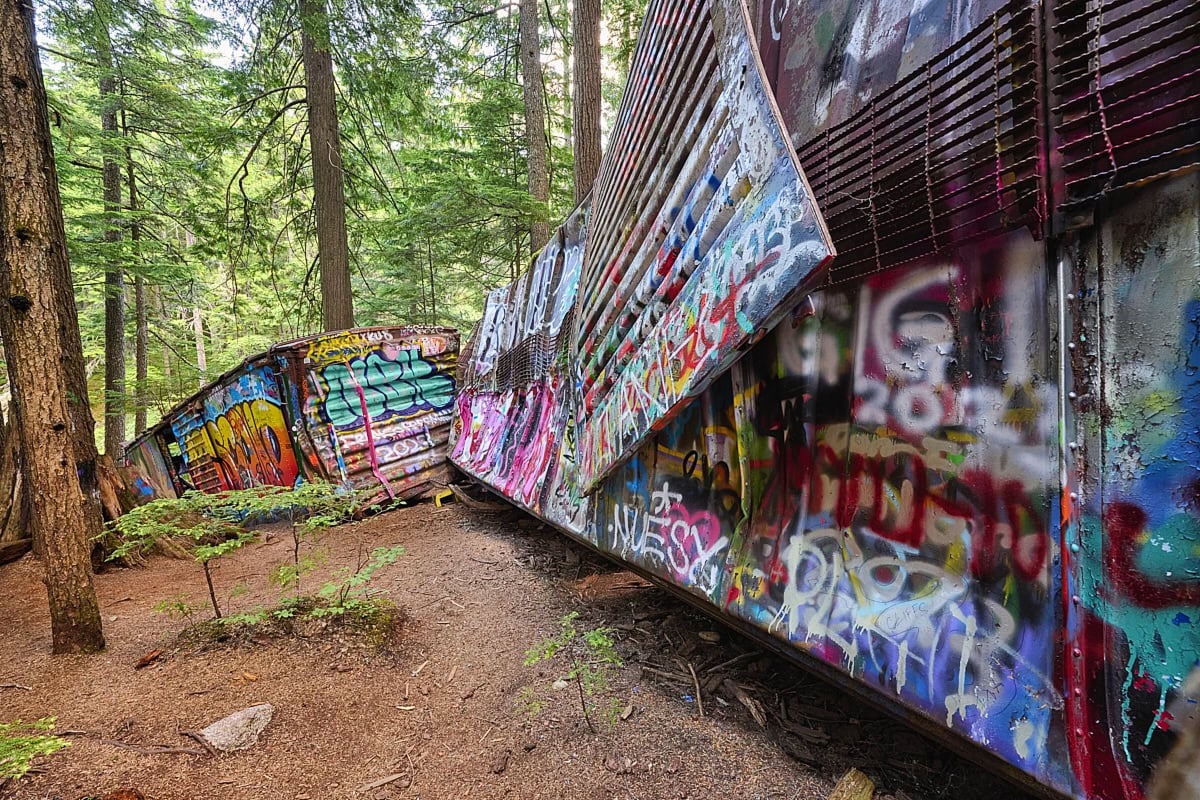
In 1956, the area around Alta Lake was a remote stretch of forest and fishing country in British Columbia. The idea of Whistler becoming the vibrant destination that would co-host the 2010 Winter Olympics was entirely unimaginable. So it is perhaps no surprise that the Pacific Great Eastern Railway took a rather unconventional approach to recovering a derailed freight train. A local forestry company was brought in to drag the stricken wagons off the tracks and into the woods. And there they have remained ever since.
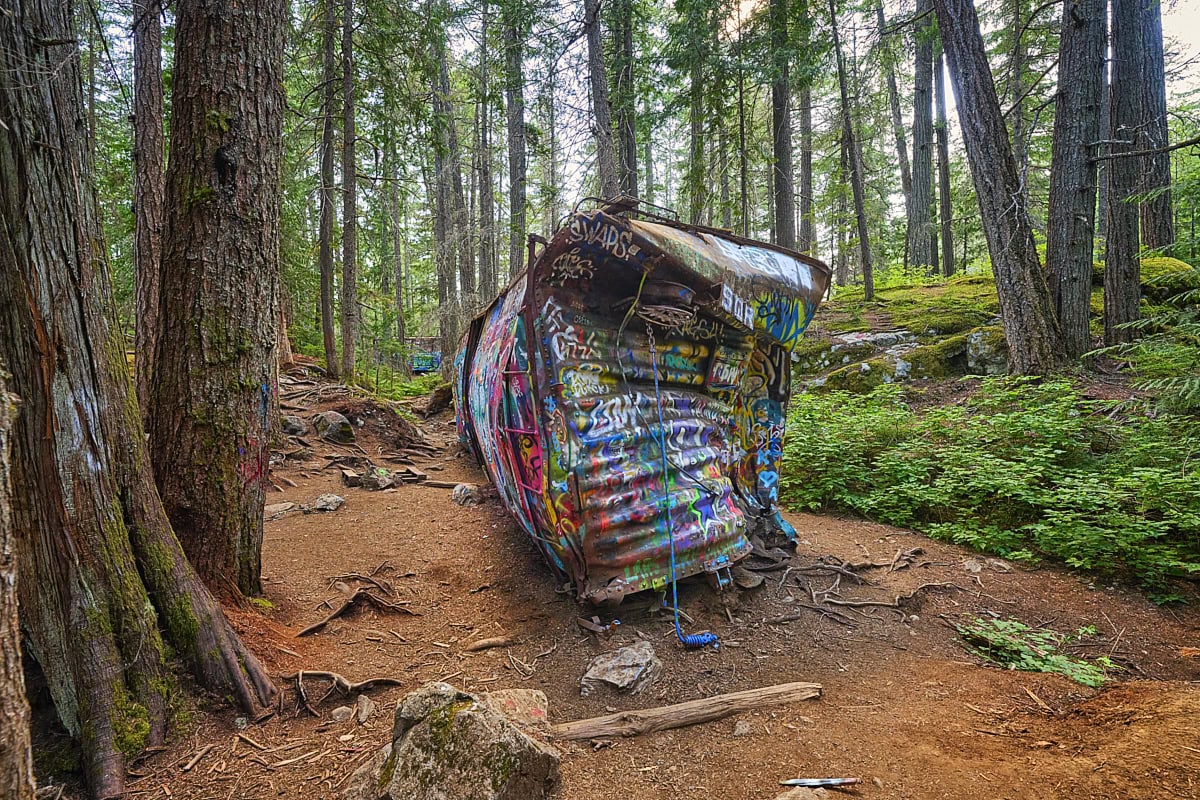
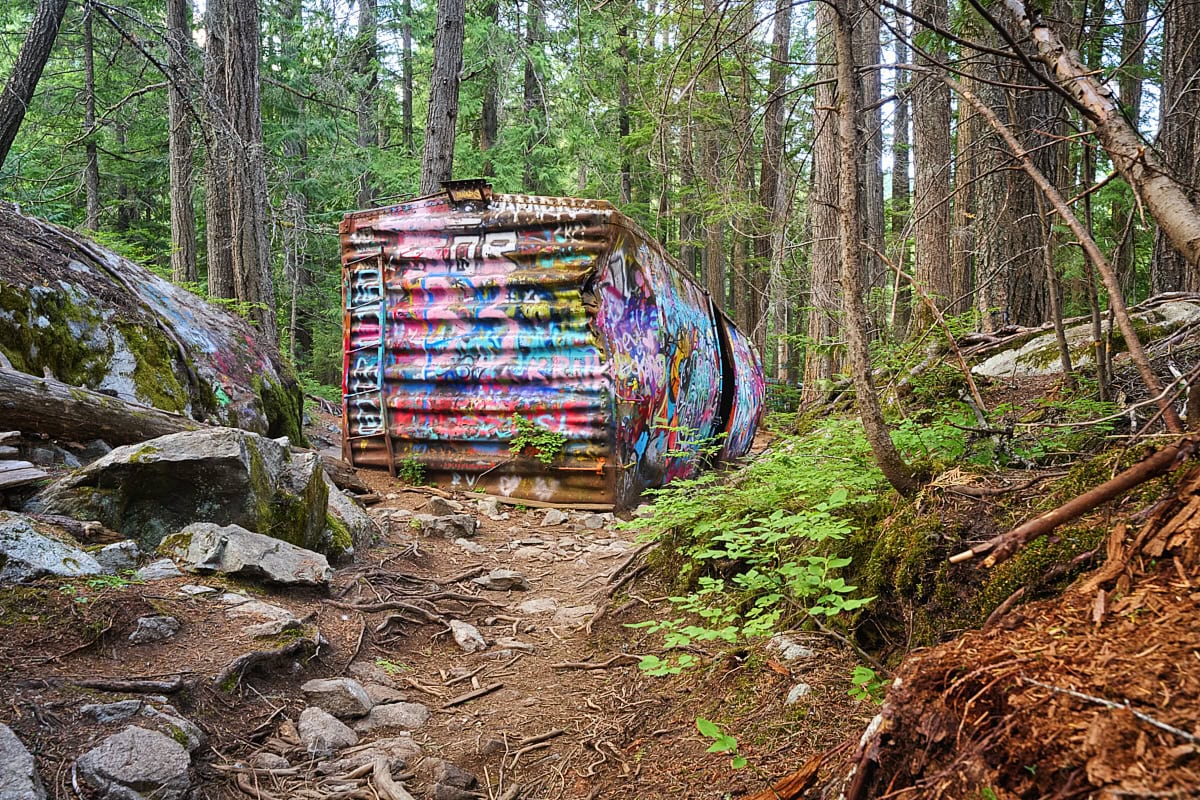
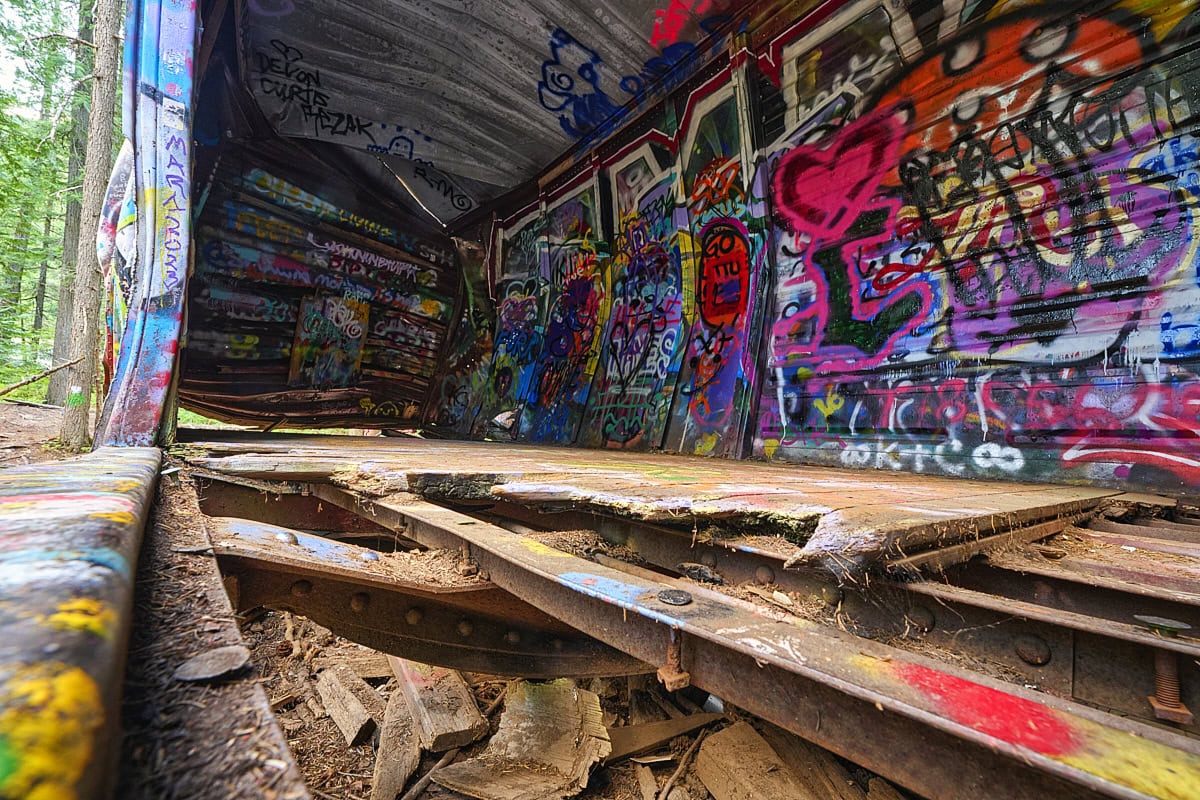
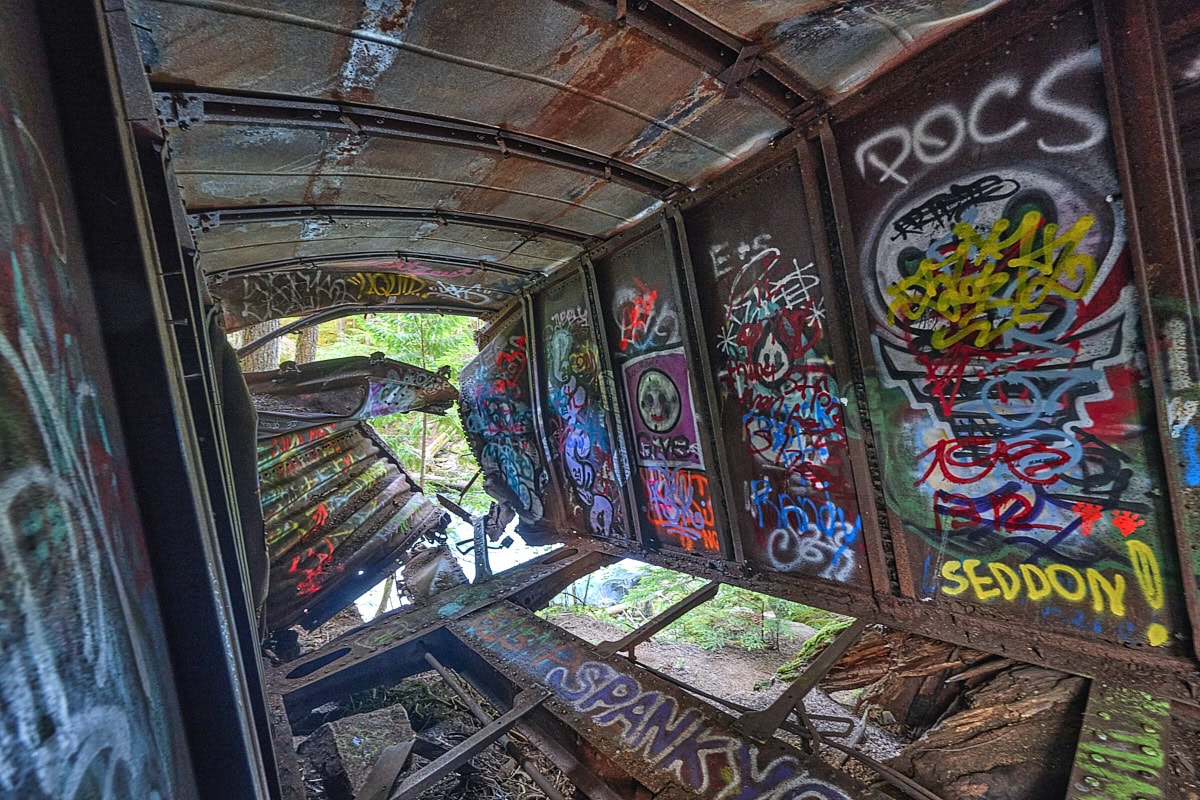
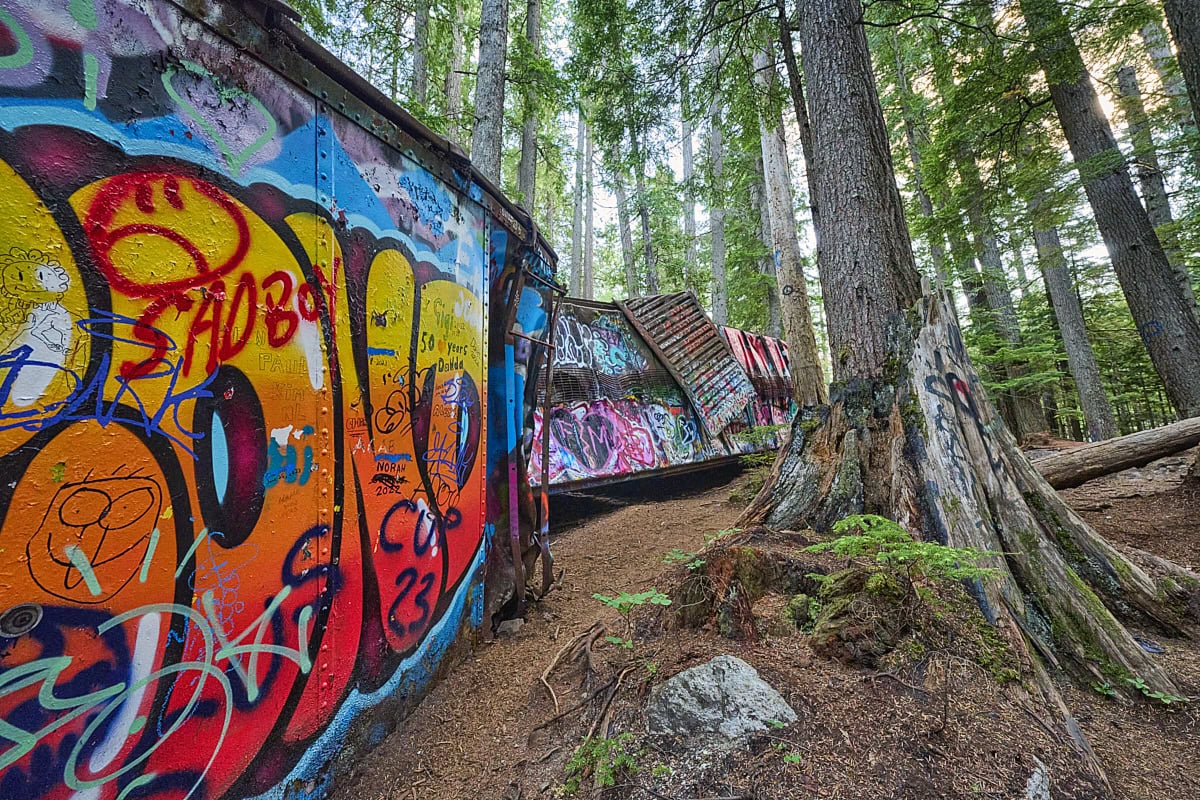
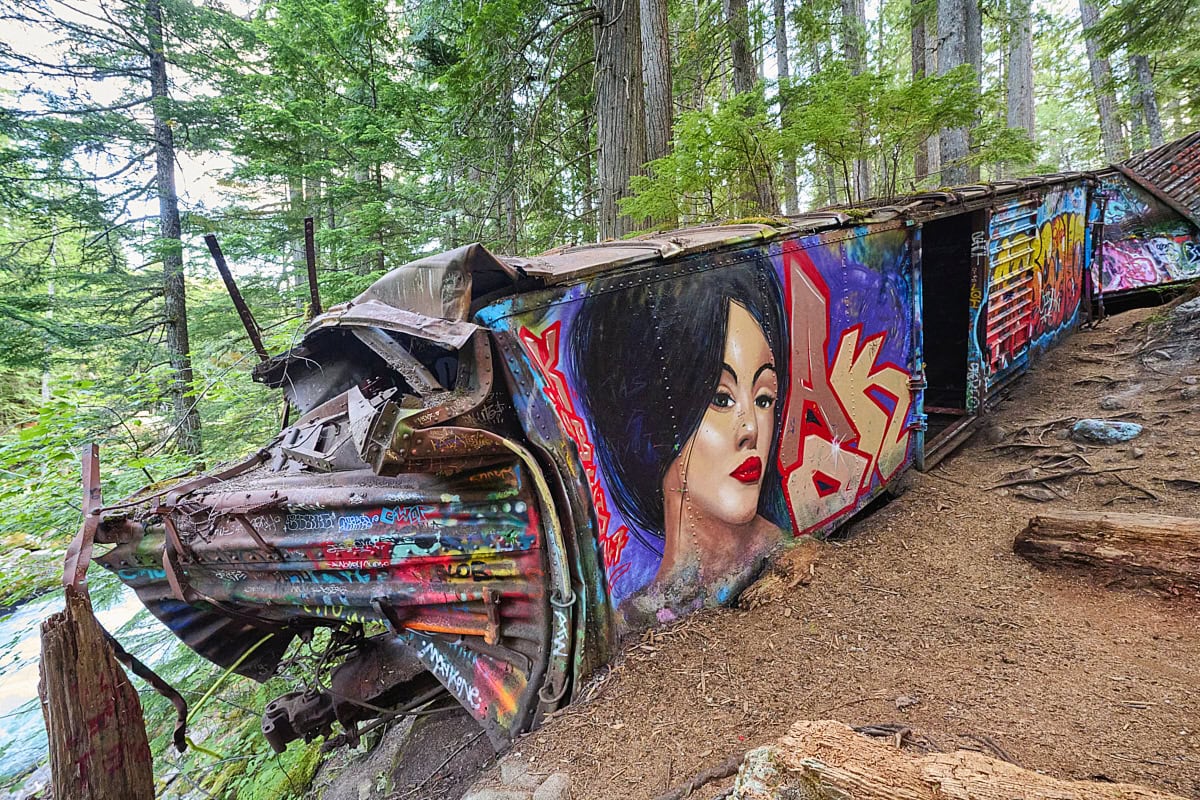
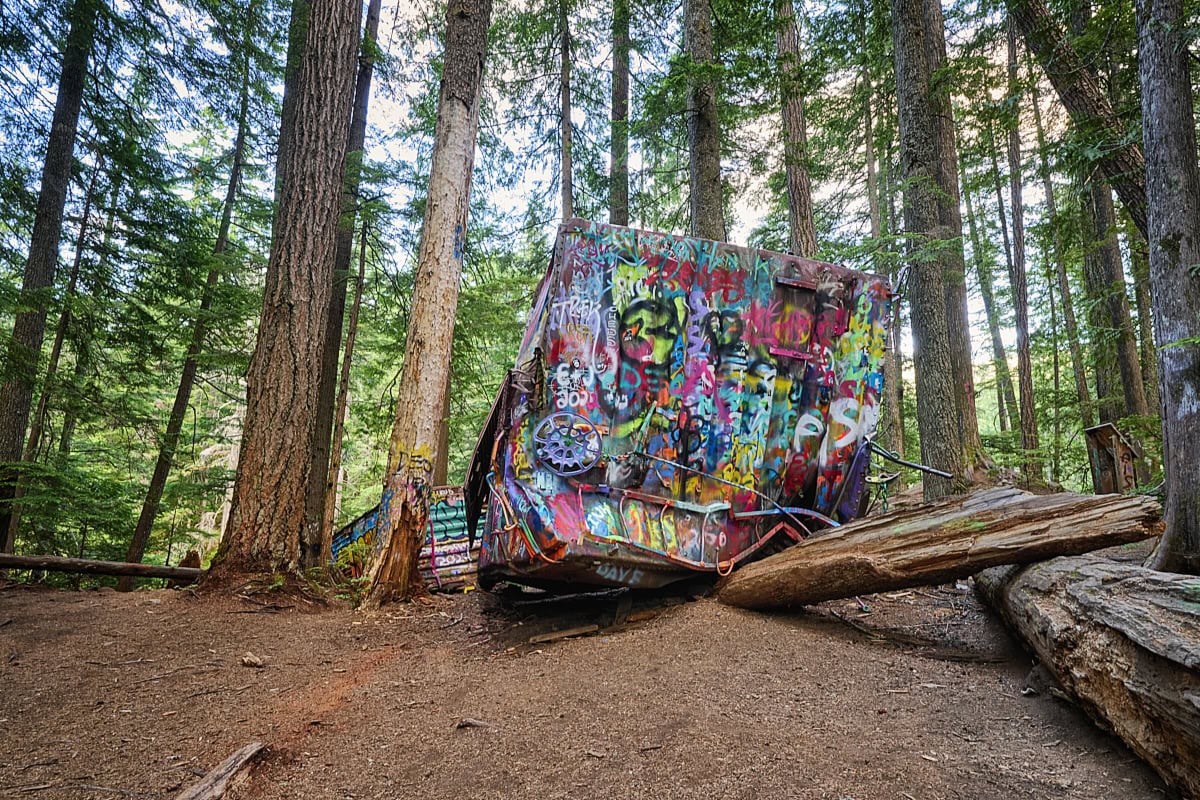
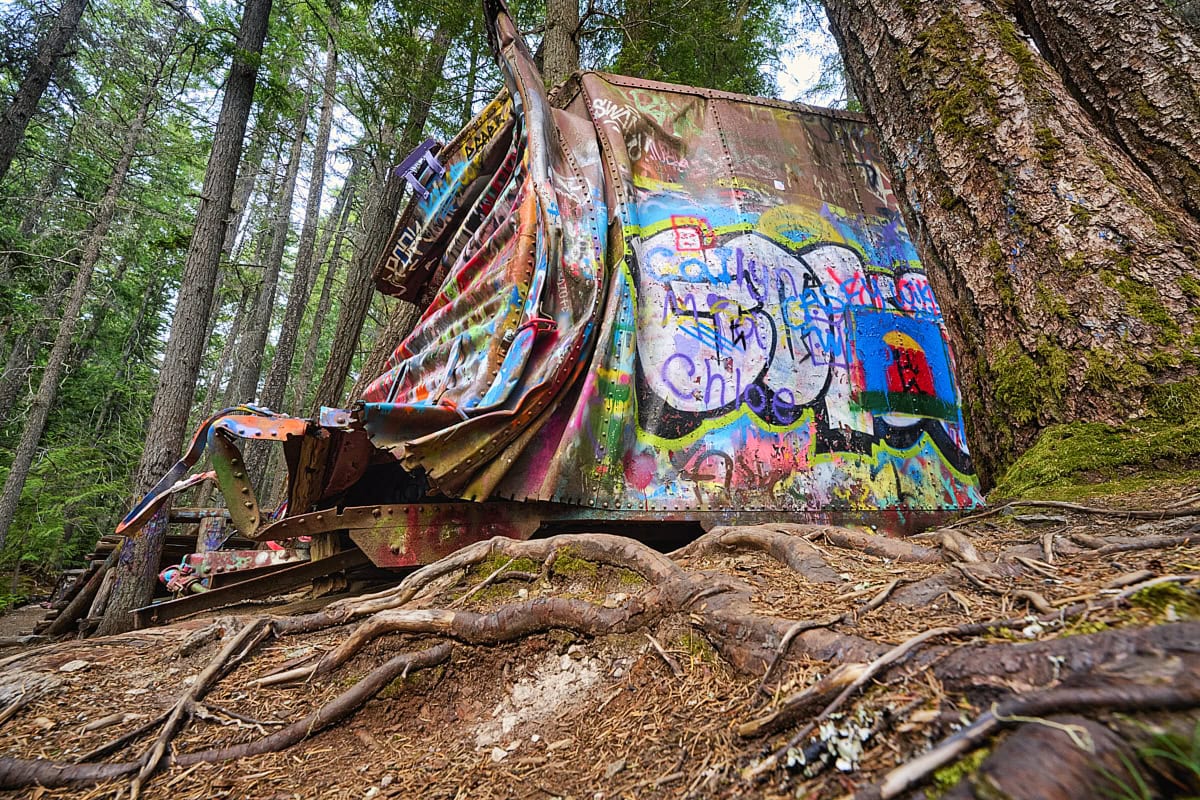
Over the years the wrecks fell into obscurity, until mountain bikers rediscovered them in the 1990s and began using them as a parcours. The first graffiti appeared. Then in the summer of 2011, artist Chili Thom organised what he called a Paint Jam, inviting a group of local artists to the site. In a single evening they transformed the wrecks into an open-air gallery. The wagons have looked different ever since. The construction of a suspension bridge over the Cheakamus River in 2016 helped the Whistler Train Wrecks establish themselves as a proper tourist attraction. Until then, the only way to reach the site was to walk along active railway tracks – illegal, needless to say.
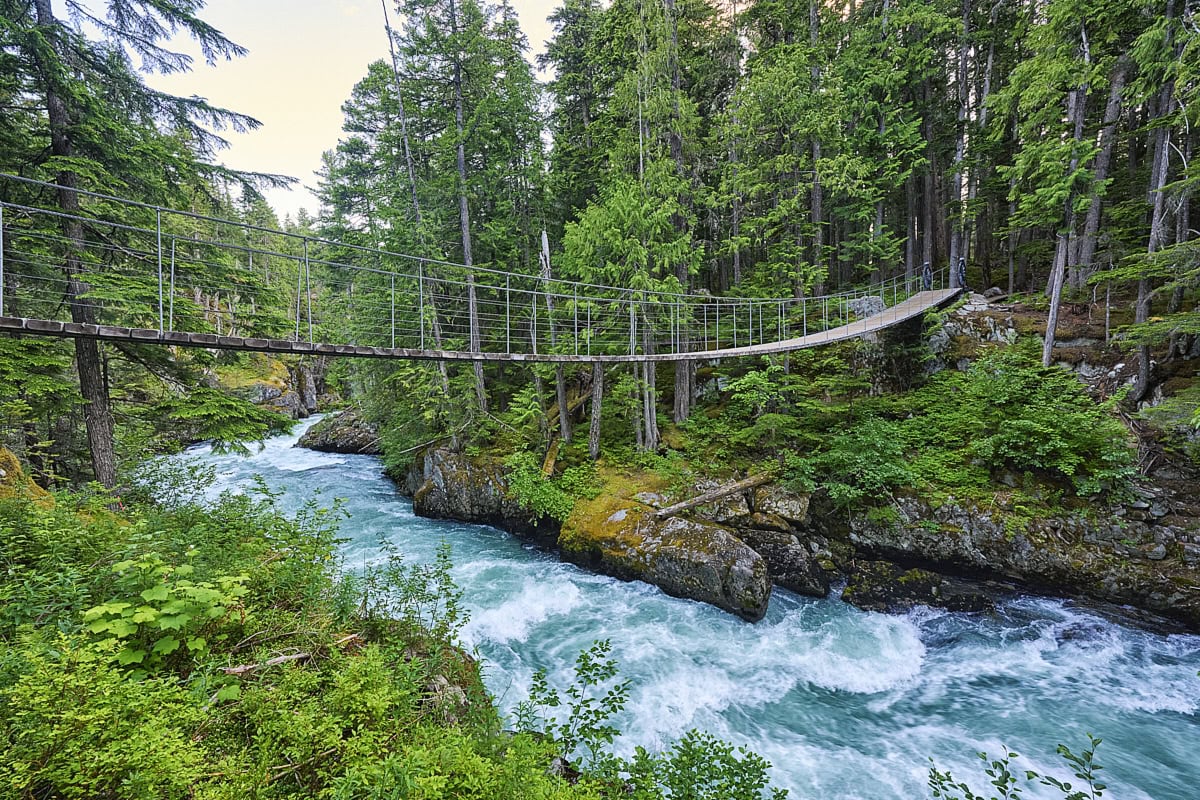
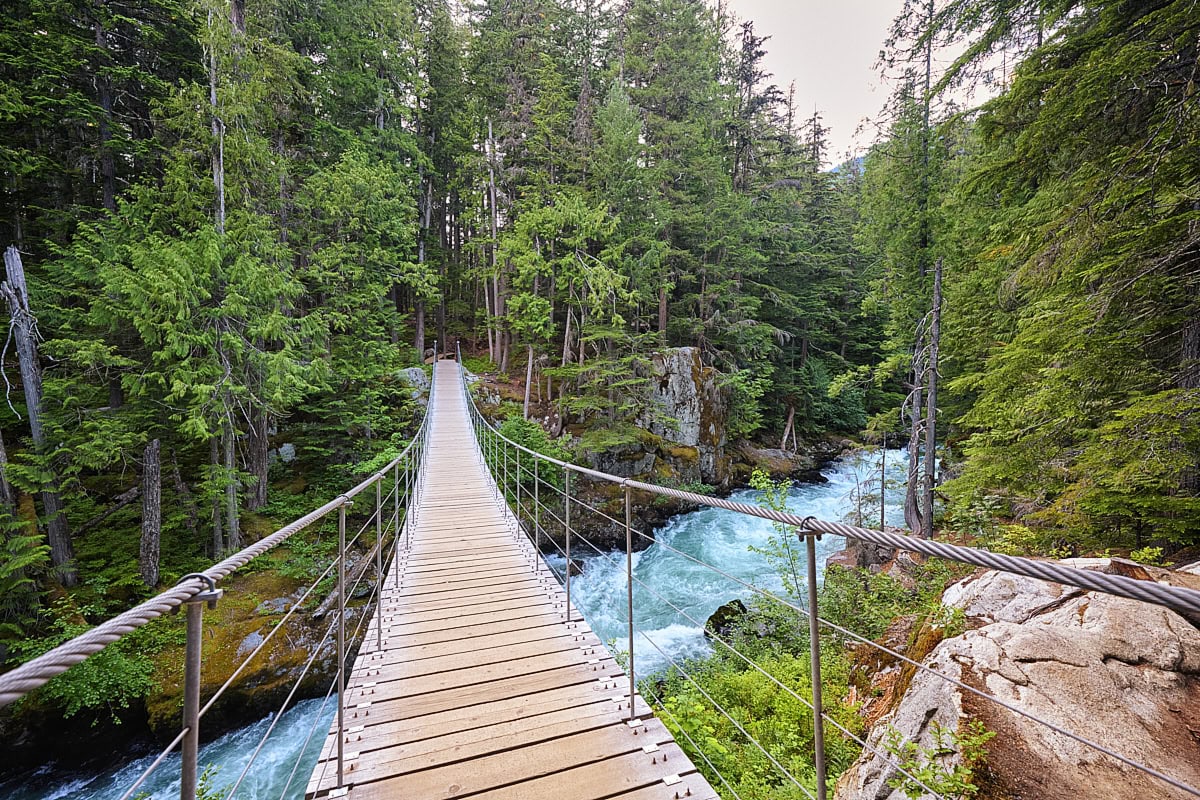
I had the Train Wreck Trail on my photography list as an optional extra, something to fit in if time allowed during my visit to Whistler. What I found there surprised me. The suspension bridge over the roaring Cheakamus River sets the tone before you even cross it, announcing that you are about to enter a different world. The thunder of the river carries across the entire site, giving the atmosphere a strange restlessness. On the other side you encounter a scene that has something deeply surreal about it: railway wagons and nature, two worlds that have no obvious business being together, woven into each other in the most fascinating way. There is no shortage of unusual photographic subjects. I am very glad there was still time for this location.
Location
Near Whistler in British Columbia, Canada. (Maps)
Photography opportunities
Railway cars decorated with graffiti in the middle of the forest.
Best time to photograph
Early in the morning or towards evening, when there are fewer visitors and the light is softer.
Photo gear I used
Camera, 14–24 mm for the carriages in the forest and 24–70 mm for details, tripod for low light in the forest.
Photography tips
Although the railway wagons are the real eye-catchers, you should also give plenty of space to the forest. This creates context for the extraordinary surroundings.
The Cheakamus River and the suspension bridge also make for worthwhile photo opportunities.
Parking
At the Whistler Field Hockey Club. The footpath leads straight into the forest from there. (Maps)
Walking Distance
It is about 1.2 km from the car park to the Train Wrecks. The walk takes 15–20 minutes – and, of course, the same amount of time for the return journey.
Where to Stay Nearby
In Whistler.
Related posts
Hi I’m Stefan
On my blog, I take you along on my travels, write about photo locations, and share insights into my work as a landscape photographer.
Join my Newsletter
Subscribe to my free, monthly newsletter and get exclusive discounts, travel stories and insights about photo locations, and be first to hear about new releases and more:
By clicking on ‘Subscribe’, you agree that we may process your personal data in accordance with our privacy policy.
