
The Giant’s Causeway and its counterpart across the sea
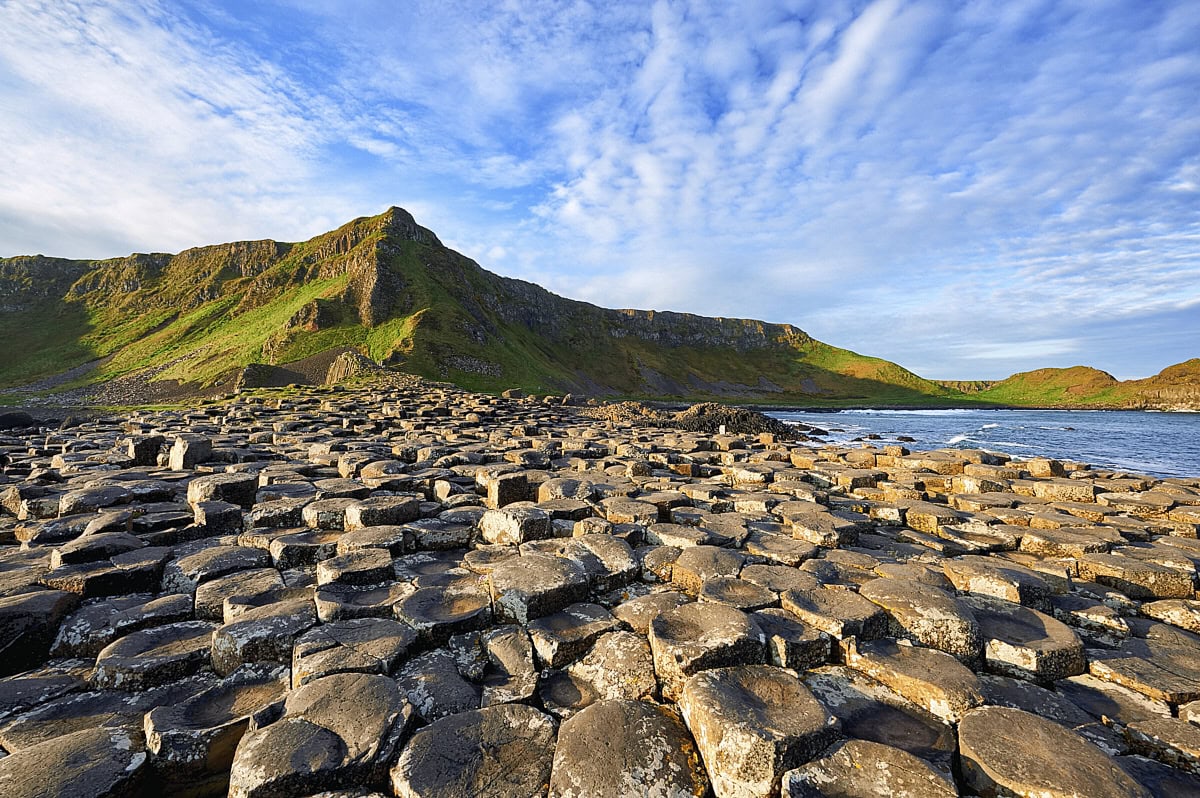
The name Giant’s Causeway refers to an ancient legend according to which the basalt columns in Northern Ireland and on the Scottish island of Staffa were once part of a causeway built by the Irish giant Finn McCool. The columns led across to Fingal’s Cave on Staffa, where the Scottish giant Benandonner lived, with whom McCool was at odds. The sight of Benandonner’s true size frightened McCool so badly that he fled straight back to Ireland. When the Scottish giant one day came knocking at the McCools’ door, the Irish giant was in serious trouble. His wife Oonagh quickly disguised him as a baby and laid him in a cradle. When Benandonner saw how enormous the supposed infant was, he concluded that its father must be a true giant and fled back to Scotland in a panic. He tore the causeway down behind him. What remains to this day are the characteristic basalt columns.
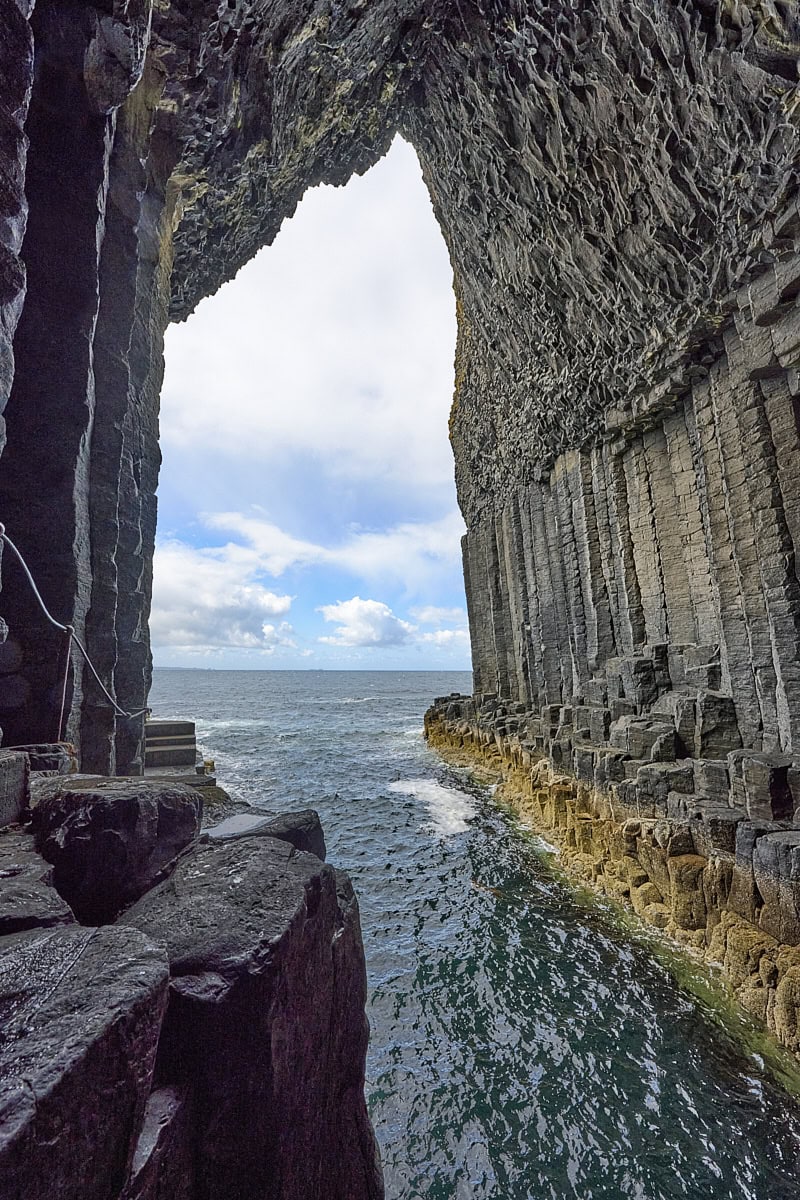
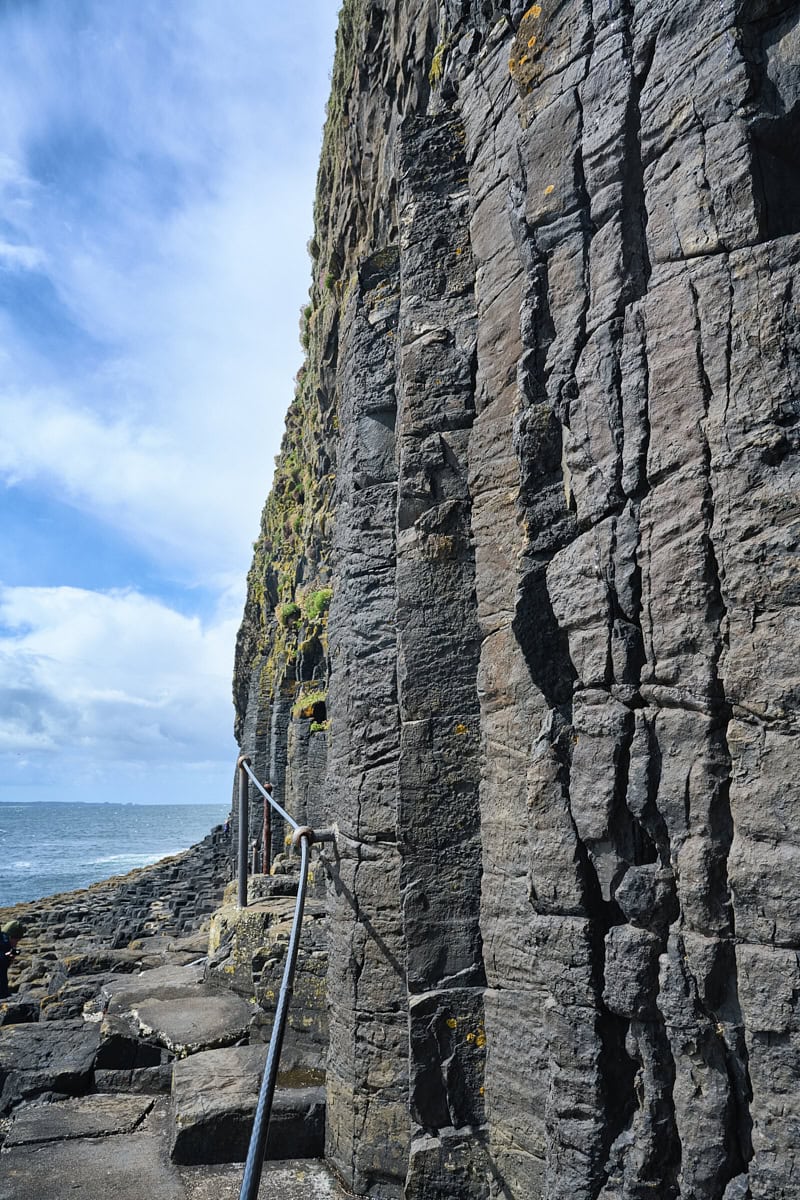
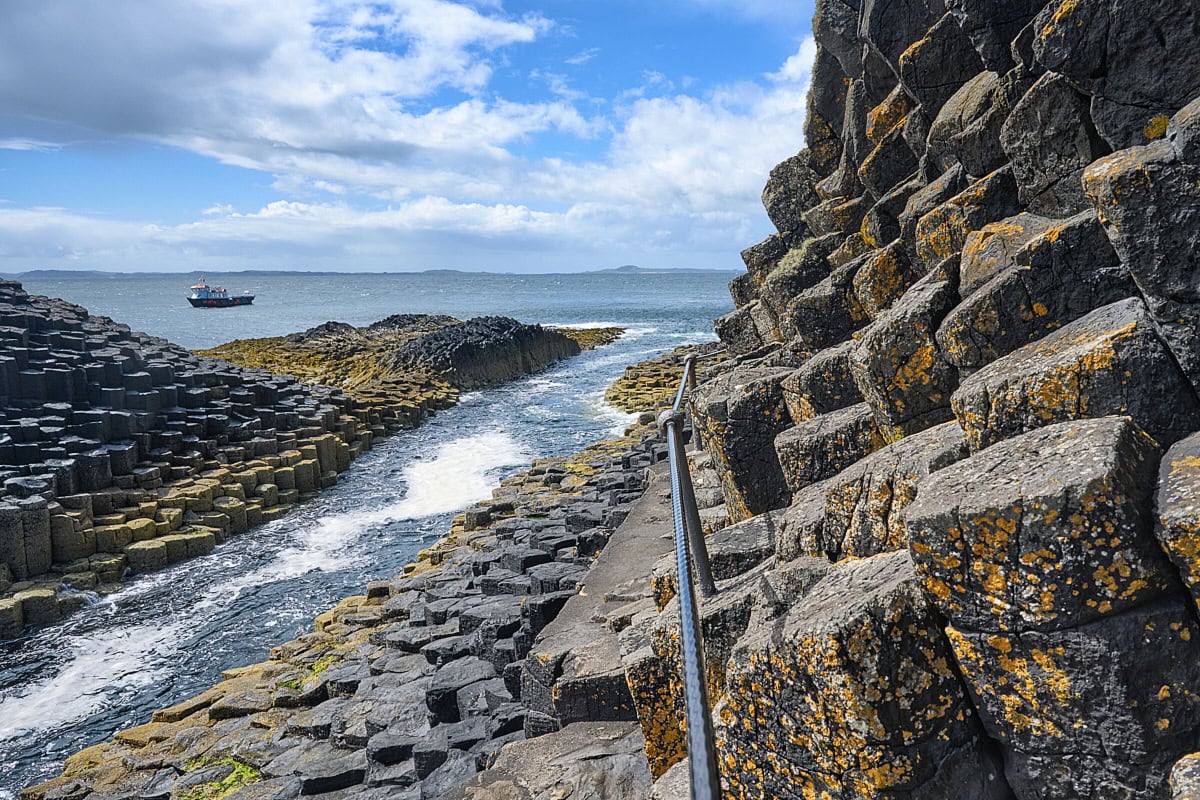
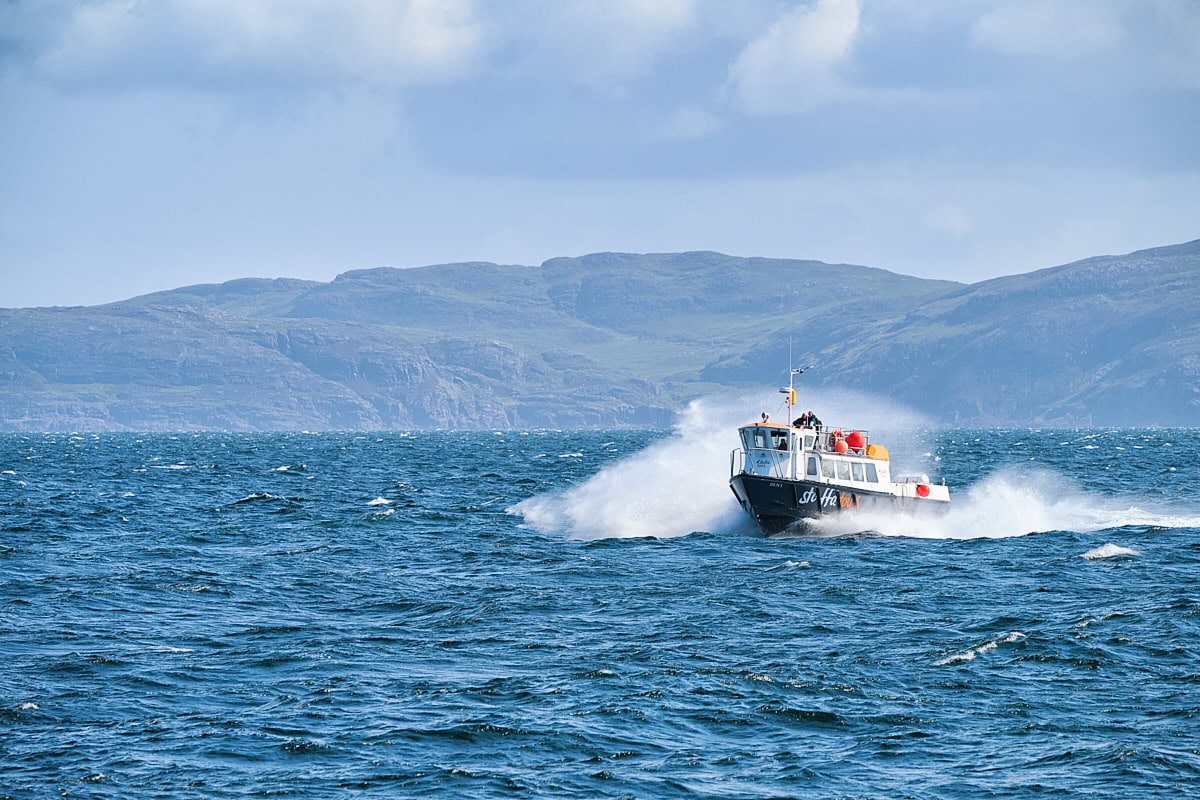
Geologists will no doubt have a more substantiated account of its origins, and I must admit that my own doubts surfaced when I visited Staffa. The island is far too small for a giant, and Fingal’s Cave is a place in which nobody could really live. Unless you have a fondness for wet feet. The basalt columns are impressive on both sides of the former causeway, though on Staffa they feel somewhat more monumental. This is probably also due to the island’s exposed location and the fact that it can only be reached by boat. Access is considerably more involved and requires a degree of planning, which gives the visit something special.
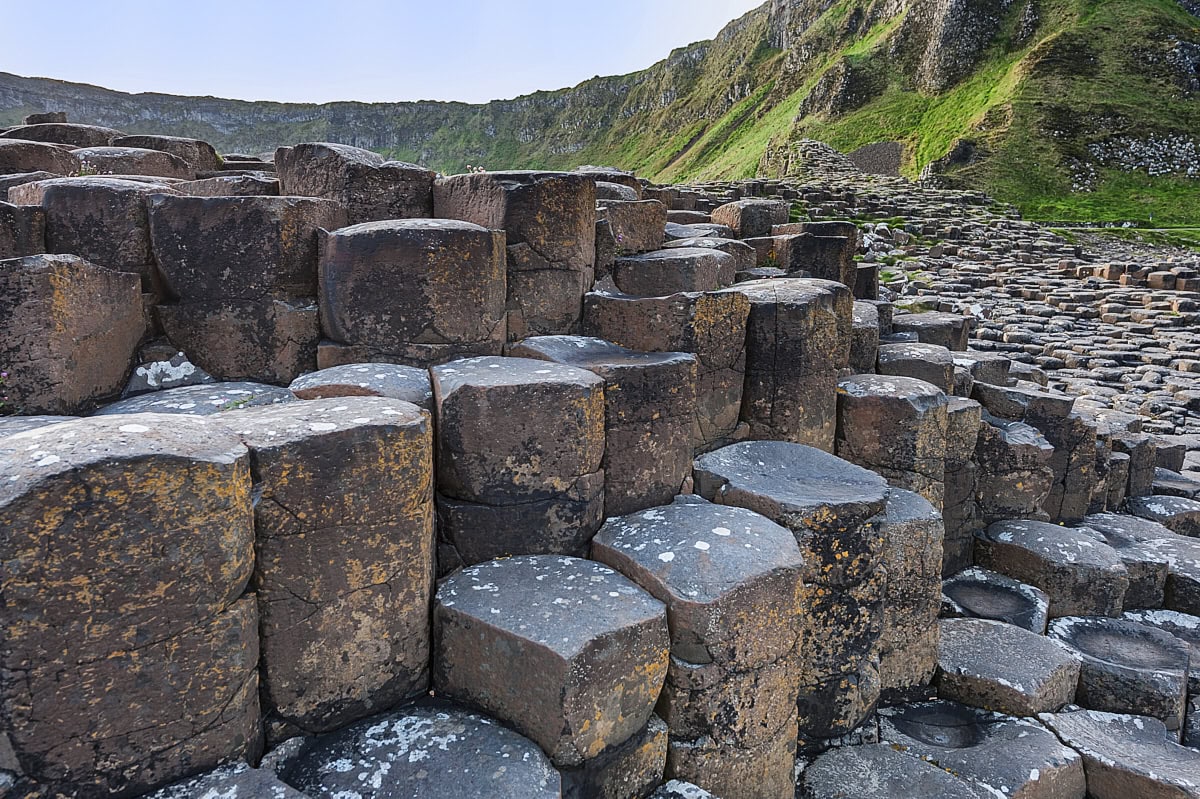
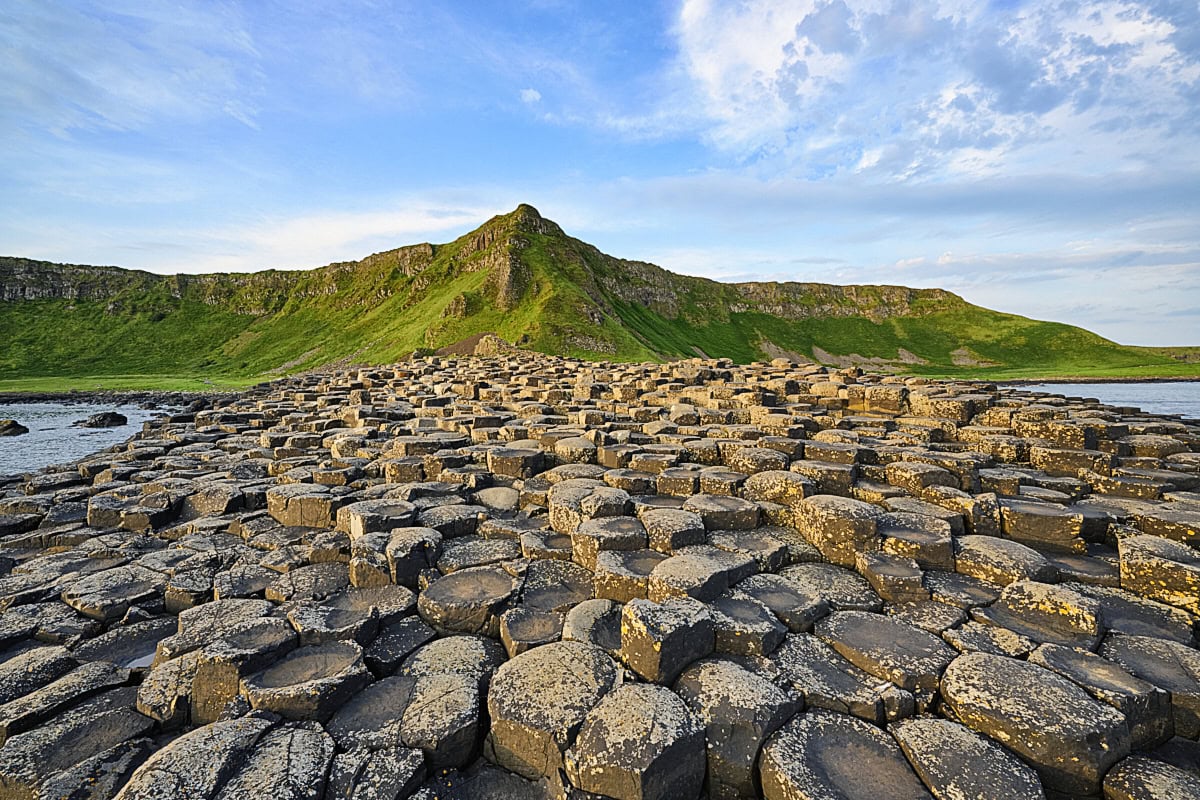
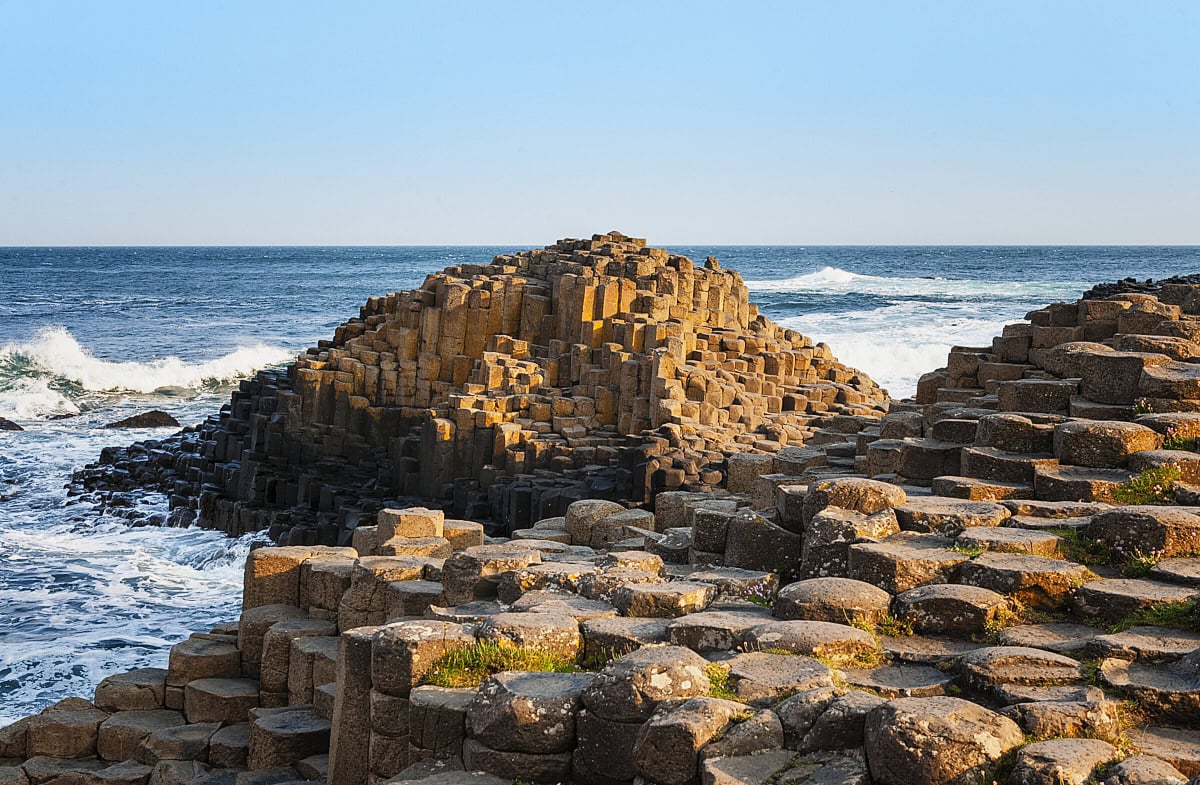
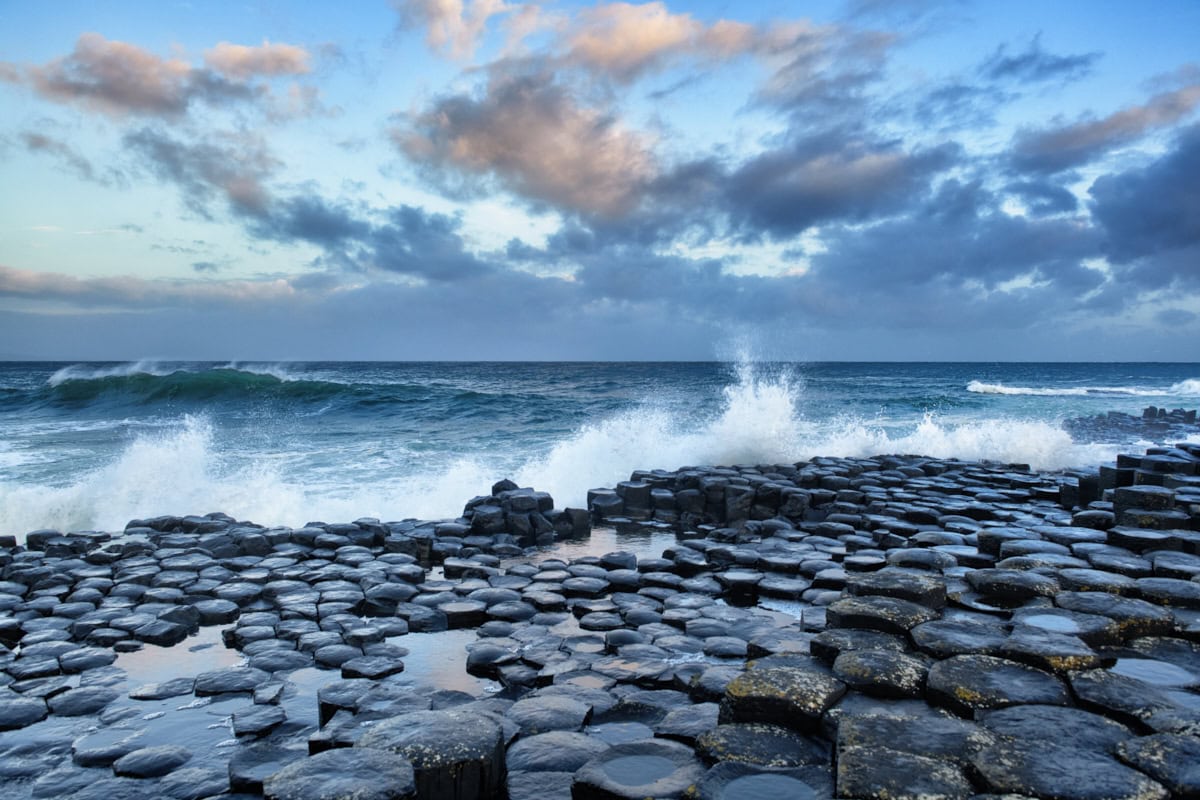
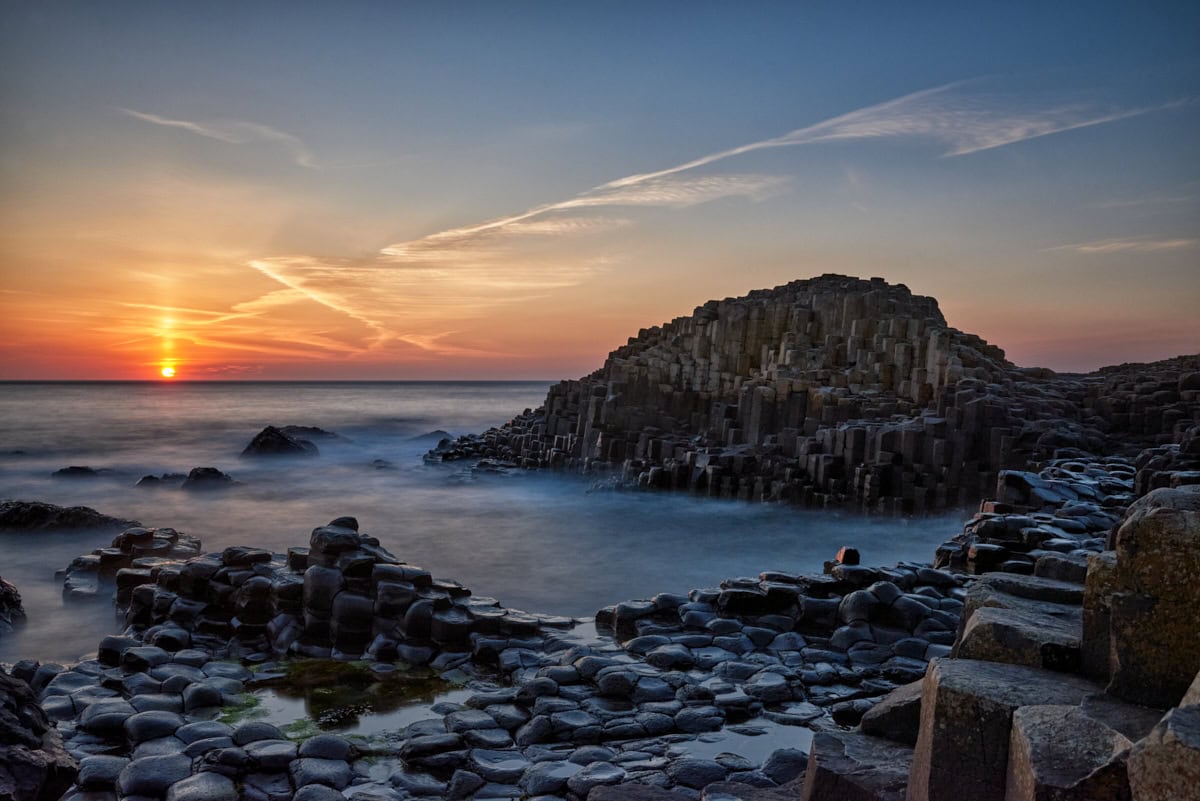
My preferred time to visit the Giant’s Causeway is very early in the morning at sunrise. Partly for the soft light that sweeps across the coast. And partly because at that hour I am usually alone. Not only to photograph the Causeway without crowds in my lens, but because the place radiates a grounding tranquillity at that hour that simply cannot be felt during the day. Perhaps it has something to do with the age of the stones? During the day, when the visitor centre is open and busload after busload of visitors is ferried down to the Causeway, undisturbed photography becomes difficult to impossible. A UNESCO World Heritage Site must, after all, be visited. Incidentally, the Causeway can be visited at any time of day, even when the visitor centre is closed. You simply have to walk down.
Before any visit, it is worth checking the tide calendar. At low tide, significantly more of the alleged 40,000 basalt columns are visible above the water than at high tide. The difference is considerable, and the Causeway looks far more imposing when the tide is out.
Location
Near Bushmills, County Antrim, Northern Ireland. (Maps)
Photography opportunities
Coastal landscape featuring basalt columns set against rugged cliffs.
Best time to photograph
At sunrise and sunset.
Photo gear I used
Camera, 14–24 mm for panoramic shots and 24–70 mm for details, ND filter, polarising filter, tripod.
Photography tips
The Causeway is also a lovely spot for sunset. However, it is usually busier then.
Note: In this article, I have highlighted two sides of a legend that are around 140 km apart as the crow flies. However, a visit to Staffa cannot easily be combined with the Giant’s Causeway (at least not unless you are a giant). To visit Staffa in Scotland, you must first travel to the Scottish island of Mull, from where the boats to Staffa depart.
Parking
Right next to the Visitor Centre. (Maps)
Walking Distance
The walk down to the Causeway is around 1 km. You walk along the road. A paid shuttle bus runs along this route during the day.
Where to Stay Nearby
In Bushmills or Ballycastle.
Related posts
Hi I’m Stefan
On my blog, I take you along on my travels, write about photo locations, and share insights into my work as a landscape photographer.
Join my Newsletter
Subscribe to my free, monthly newsletter and get exclusive discounts, travel stories and insights about photo locations, and be first to hear about new releases and more:
By clicking on ‘Subscribe’, you agree that we may process your personal data in accordance with our privacy policy.
