
See, Understand, Photograph
‘How can you photograph what you see in front of you exactly as you see it?’ someone asked me recently at a garden party. The topic had evidently been on his mind, and having a photographer to hand was a welcome opportunity for him. I found the question utterly fascinating and explained that everything begins before you even pick up the camera, namely with seeing. Only once you truly see a subject do you understand how to compose it. You also know which creative means to draw on and how to apply the technique. So first see and understand, then photograph.
I could see that my answer was too abstract for him, so I went deeper into it. What we believe we see is not a neutral representation of reality, but a reworked version of it. Our brain takes the information relayed by the eye and turns it into a single, seamless image, applying all sorts of filters that shape how we individually interpret what we see. To see consciously, you have to interrupt this automatic process. You have to recognise what is really there, rather than simply accepting what the brain would otherwise fob off on us. That, for me, is precisely the difference between passive visual perception and conscious seeing. To make this more tangible, I told him about my photography workshops, where I kept observing the same thing. Much to their surprise, I always asked participants to put their camera aside first and not to set up their tripods just yet. Instead of fiddling with equipment, they were to look at the location and take it in first, let it work on them, and only then think about how they wanted to capture it. Over the course of the workshop week, they increasingly developed a better understanding of what they were looking at. The images formed in their heads before any photograph was even taken, and it was exactly this that made the photographs better too.
My conversation partner wanted to know whether this was something you could actually learn. ‘With a bit of effort, definitely,’ I replied. The longer you work with this approach — see, understand, photograph — the better your results get. Over time, the process becomes second nature. You approach a location and immediately recognise shapes or lines you can work with creatively. You spot reflections or overlaps and know instinctively how to eliminate them. You register a high contrast range at a glance and compensate for it with filters. The better you understand what you see, the easier it becomes to draw the right conclusions for capturing a shot.
He was clearly eager to learn, so I gave him a tip to take with him. It would help, I told him, to make use of every opportunity to assess photographs, especially, of course, his own. What is good about an image, what is bad, that’s the question worth asking of every photograph you come across. At some point you internalise this image analysis so thoroughly that you apply it while seeing, even before you photograph at all. You keep analysing throughout, even while looking through the viewfinder or at the display, as a shot is being taken. I told him how an intensive picture critique turned me into a fan of image analysis myself. A few years ago in Ballycastle, I sat comfortably with a client and for around an hour we looked at every single shot I had produced for him that week. I hadn’t planned it that way, because normally images are pre-selected before a client ever sees them. Here we also went through photographs that would never have made it into a selection, and I got feedback on truly every single image. My client, a highly experienced art buyer, told me bluntly what he liked and what he didn’t. There was plenty of criticism, but what I learned in that one hour was priceless. Since then, image analysis has been my constant companion, and I still gladly pass on this lesson to this day, as I did that afternoon in the garden.
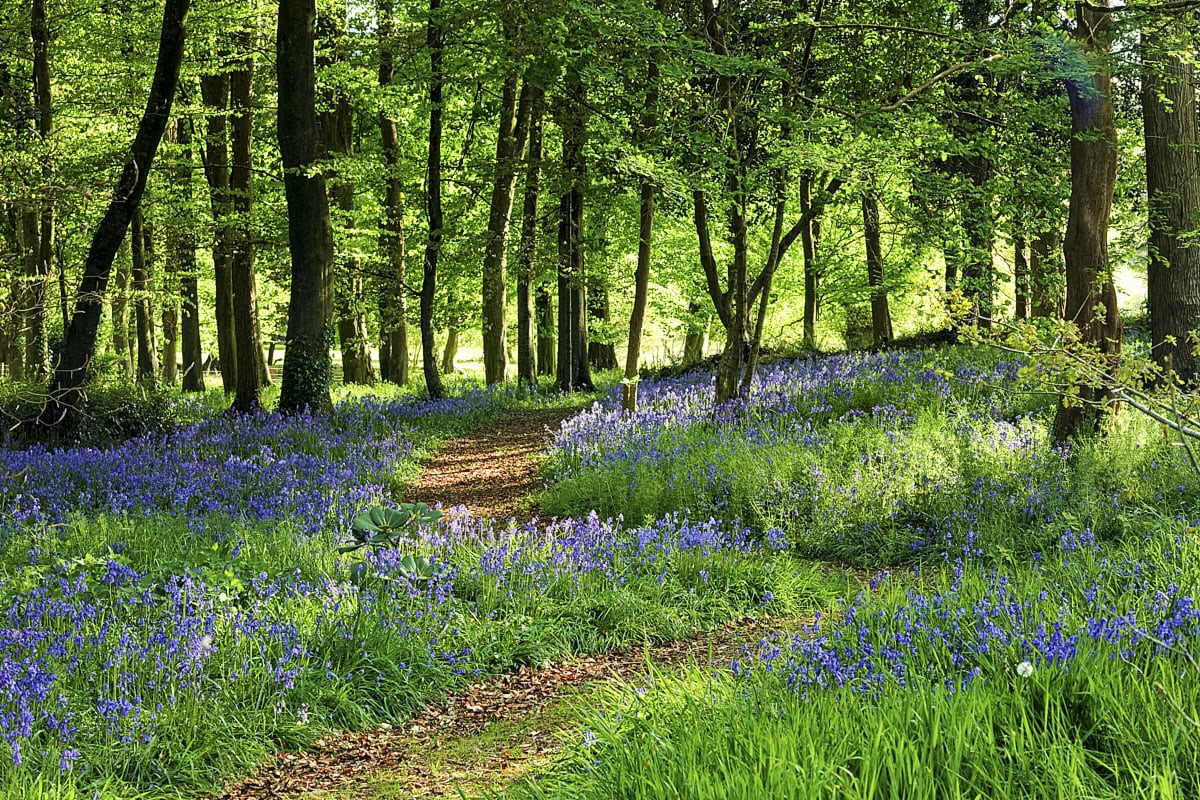
My conversation partner nodded thoughtfully and then looked sceptically at the lawn in front of us. Behind the hedge, only the neighbour’s house peeked through. ‘No subject,’ he concluded. I raised my index finger, got up from my deckchair without a word, and walked around the garden for a moment. A little later I waved him over to join me. Just a few steps from where we had been sitting, we found ourselves facing colourful balloons and garlands, with glowing flowers beyond them. Although it was the same garden, the view suddenly looked different from before. He grabbed his mobile, took a photograph from exactly this spot, and was surprised by the result himself. Photographs, it seemed, were what won him over, so I showed him a picture on my smartphone of a forest full of bluebells at Huntington Castle in County Carlow, Ireland. As I showed it to him, I explained how the shot had come about, with the friendly warning that things were about to get technical. The obvious subject there would have been the carpet of bluebells, and in that first moment I too was captivated by the sight. On its own, though, I felt the image lacked depth, or rather a visual anchor. As I walked a little further to let the scene work on me, I realised that the path itself, the one that had brought me here in the first place, had become an important part of what I saw in front of me. It formed a fixed point within the abundance of blossom, led into the image as a line, and drew the viewer’s eye towards the centre of the frame. To actually capture this effect, I chose a longer focal length, which visually draws the foreground and background closer together, and stepped off the path itself to capture its sweep more effectively. My position was also deliberately chosen: high enough to show the path as a leading element, but low enough for the blossom to come across as a solid expanse. The bluebells alone would surely have made an impact too, but it was only through these decisions that the first, still unreflected impression of the scene became the image I actually had before my eyes. My conversation partner looked at the photograph for a while and nodded approvingly. He had now seen and understood how my ‘See, Understand, Photograph’ principle played out in practice. I am already looking forward to the shots he will send me before long.
Related posts
Hi I’m Stefan
On my blog, I take you along on my travels, write about photo locations, and share insights into my work as a landscape photographer.
Join my Newsletter
Subscribe to my free, monthly newsletter and get exclusive discounts, travel stories and insights about photo locations, and be first to hear about new releases and more:
By clicking on ‘Subscribe’, you agree that we may process your personal data in accordance with our privacy policy.
